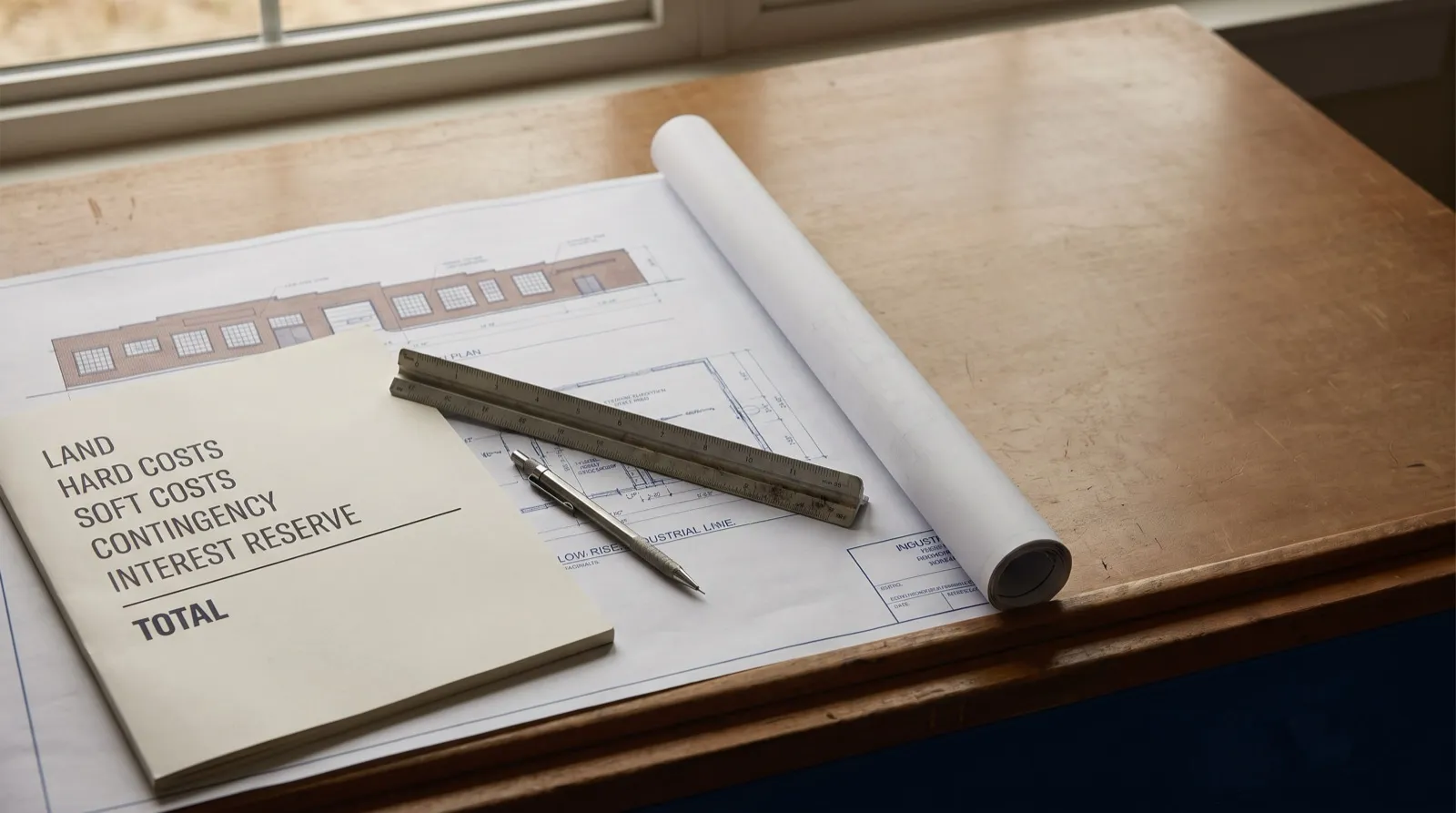

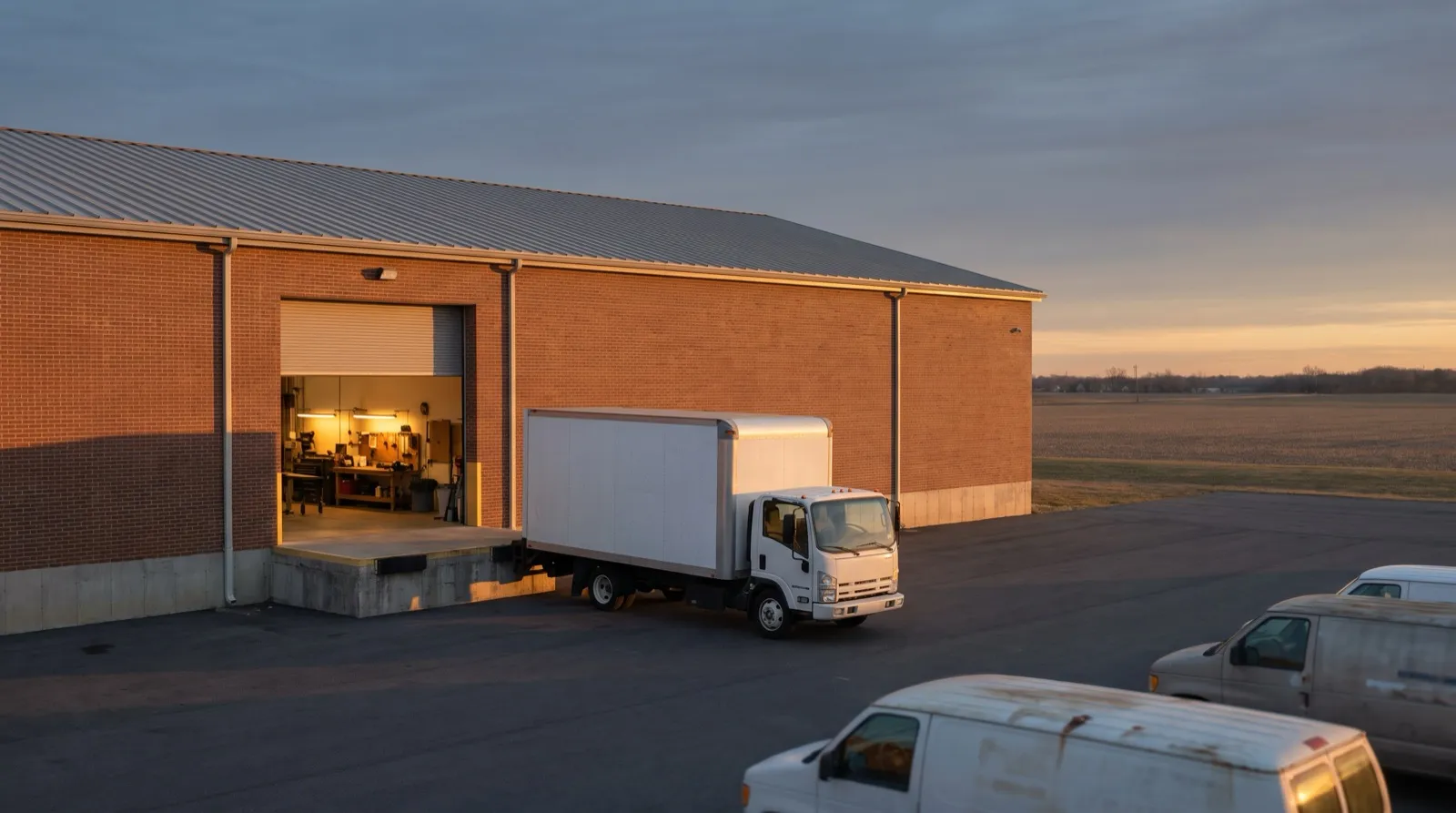
An owner-occupied commercial real estate loan is a mortgage on a building your own business uses for its operations. The lender repays itself from your company’s cash flow rather than from tenant rent. That one difference drives the 51% occupancy test, the 90% financing available through an SBA 504, the longer amortization, and the personal financial statement every 20% owner signs.
What is an owner-occupied commercial real estate loan?
An owner-occupied commercial real estate loan is a loan secured by a nonresidential property, such as an office, warehouse, shop, or clinic, that the borrower’s own business occupies and uses. The primary source of repayment is the cash flow of the business operating in the building, not rent from unrelated tenants. SBA programs set the occupancy threshold at 51% of an existing building or 60% of new construction. Bank regulators classify a loan as owner-occupied when less than half of its repayment comes from third-party rent.
The phrase covers three products that are usually quoted side by side: a conventional bank mortgage, an SBA 504 loan, and an SBA 7(a) loan used for real estate. All three attach to the same kind of building and the same kind of borrower. They differ in leverage, term, rate structure, and paperwork, which the terms table below lays out. The thing they share is the underwriting question: can this business carry this mortgage?
Two definitions of “owner-occupied,” and why both matter
Borrowers get tripped up because the SBA and the bank regulators measure occupancy differently. An SBA loan has to pass the first test. Every loan at an FDIC-insured bank gets sorted by the second at origination.
| Test | Who uses it | What it measures | Threshold |
|---|---|---|---|
| Space test | SBA 7(a) and 504 lenders | Share of Rentable Property your business permanently occupies | 51% of an existing building; 60% of new construction, with long-term leasing capped at 20% |
| Repayment test | Every FDIC-insured bank, on its Call Report | Share of loan repayment that comes from your business versus unrelated tenants | Third-party rent must be less than 50% of the repayment source |
The SBA space test. Under 13 CFR 120.131, when SBA proceeds buy, renovate, or reconstruct an existing building, your business must permanently occupy at least 51% of the Rentable Property and may lease out up to 49%. On new construction you must occupy 60% at the start and may permanently lease up to 20%. You must plan to occupy some of the rest within three years and all of it within ten, which is where “60% now, 80% eventually” comes from.
SOP 50 10 8.1 measures Rentable Property as the total square footage of buildings used in the business. It excludes stairways, elevators, and mechanical areas, includes common areas, and includes exterior space your business actively uses, such as a contractor’s yard or a marina’s slips. Parking never counts.
The bank repayment test. The FFIEC Call Report instructions classify a loan by where the money comes from. A loan is owner-occupied when the primary source of repayment is “the cash flow from the ongoing operations and activities conducted by the party, or an affiliate of the party, who owns the property.” Rent from unaffiliated tenants has to be less than 50% of the repayment source.
The bank decides which bucket the loan goes in at origination and reports it that way for the life of the loan.
The practical gap: a dental practice that buys a 10,000-square-foot building, occupies 5,200 feet, and leases the rest to a strong credit tenant passes the SBA test at 52%. If that tenant’s rent would cover more than half the mortgage payment, a conventional bank may still book it as investor property and underwrite the lease instead of the practice. Ask the lender which test it is applying before you negotiate the lease.
Holding companies count. Most owner-users buy through a separate LLC that leases the building to the operating business, which the SBA calls an Eligible Passive Company. 13 CFR 120.111 sets the conditions: a written lease, subordinate to the lender’s lien, at least as long as the loan, with rents assigned to the lender. Rent may not exceed the loan payment plus the LLC’s direct costs of holding the property.
Banks apply the same affiliate logic under the Call Report definition. The rent cap surprises owners who planned to charge their own company market rent and keep the spread. On an SBA deal, you cannot.
Why banks treat owner-occupied property differently
Lenders like this asset class, and the reasons are written into their rulebooks.
It sits outside the CRE concentration limits. The 2006 interagency guidance on CRE concentrations sets screening criteria, not limits. A bank draws closer supervision when construction and land loans reach 100% of capital, or when total CRE loans reach 300% of capital after growing 50% in three years. The agencies excluded owner-occupied loans from that measure because, in their words, their “risk profiles are less influenced by the condition of the general CRE market.”
A community bank that has hit its investor-CRE ceiling can often still make your loan.
It has performed better through the current cycle. The FDIC separates the two buckets: as of June 30, 2026, banks held $711 billion of owner-occupied nonfarm nonresidential loans with a noncurrent rate of 0.91%. The other $1.23 trillion of nonfarm nonresidential loans, the investor bucket, ran 1.42% (FDIC Quarterly Banking Profile, 2Q 2026 time-series spreadsheet, Loan Performance tab). The trend runs the other way, though. Owner-occupied noncurrents rose from 0.78% a year earlier while the investor bucket improved from 1.72%, so underwriters are watching business cash flow more closely than they were.
0.91% vs 1.42%
Noncurrent rate on owner-occupied versus other nonfarm nonresidential bank loans, June 30, 2026
Source: FDIC Quarterly Banking Profile, Second Quarter 2026, loan performance time series
It is simpler to underwrite. Investor deals rise and fall on leases, rollover schedules, and tenant credit. An owner-user deal rises and falls on one company’s tax returns.
The owner-occupied is a little bit easier to underwrite. On the investment side, we’re still seeing some properties change hands, but a lot of it depends on the leases and the tenants.
None of that makes credit automatic. In the Federal Reserve’s October 2026 Senior Loan Officer Survey, 12.3% of banks reported tightening standards on loans secured by nonfarm nonresidential property over the third quarter, and 3.5% reported easing. That reverses the easing banks described in July. The survey does not split owner-occupied from investor loans, so take it as the mood of the room rather than a verdict on your file.
How lenders underwrite it: the business carries the loan
The OCC’s Commercial Real Estate Lending handbook tells examiners that for owner-occupied property “the primary source of repayment is usually the cash flow generated by the occupying business.” The analysis is supposed to cover the business, the borrower, and the guarantors together. Four things follow.
Coverage is measured on the business. The debt-service-coverage ratio still applies, but the numerator is your company’s cash flow after owner compensation and existing debt, not property NOI. Conventional lenders typically start around 1.20x to 1.25x, and SOP 50 10 8.1 sets a 1.15x floor on business cash flow for standard 7(a) and 504 loans (1.25x on most 7(a) complete changes of ownership). If the number is thin, the DSCR walkthrough shows which add-backs lenders accept, and the free DSCR calculator runs the math without a signup.
Then it is measured globally. The OCC handbook says cash flows “should be assessed on a global basis,” pulling in tax returns and K-1s from every related entity plus the owners’ personal obligations. SBA lenders are required to run that global analysis and to document a global ratio of at least 1:1. Expect the lender to ask for a business debt schedule, three years of business and personal returns, and a current personal financial statement for each owner.
Every 20% owner guarantees the loan. 13 CFR 120.160 makes it a rule on SBA loans: every holder of 20% or more guarantees, and on an Eligible Passive Company deal, 20% owners of either entity do. Banks making conventional owner-occupied loans almost always require the same thing. The guarantee is what turns your personal balance sheet into collateral, and the personal guarantee explainer covers what you are signing.
The personal financial statement is the document that gets kicked back. For SBA files it is SBA Form 413, and under SOP 50 10 8.1 it must be dated within 90 days of the application reaching SBA, even though the printed form still says 120. For a bank file it is usually the bank’s own PFS, which asks for the same assets, liabilities, income, and contingent liabilities.
The contingent-liabilities section is where owner-users slip, because a personal guarantee on an equipment line, or on debt the holding LLC already carries, belongs there. Our line-by-line Form 413 guide walks through it, and the business loan use case covers how to keep the statement current between lender requests.
Build your personal financial statement in minutes
StatementsReady syncs bank balances read-only through Plaid, fills SBA Form 413, and exports a lender-ready PDF on demand.
- SBA Form 413 with every section filled
- Bank sync through Plaid, read-only
- 7 days free, no card
Owner-occupied commercial real estate loan terms in 2026
The same building can be financed three ways. The numbers below are program rules and published pricing as of early November 2026; your quote will move with your credit, the property type, and the lender’s appetite.
| Term | Conventional bank | SBA 504 | SBA 7(a) |
|---|---|---|---|
| Maximum financing | Typically 75% to 80% of value; the supervisory limit on improved property is 85% | Up to 90% of total project cost (50% bank, 40% CDC debenture, 10% you) | Up to $5 million; 10% injection is the norm |
| Down payment on a $2 million building | $400,000 to $500,000 | $200,000 (15% for a startup or special-purpose property, 20% if both) | About $200,000 |
| Maturity | 5-, 10-, or 15-year terms are common | 10, 20, or 25 years on the CDC portion; bank first lien at least 10 years behind a 20- or 25-year debenture | Up to 25 years, including extensions, for real estate |
| Amortization | 20 to 25 years, so a balloon is due at maturity | Fully amortizing on the CDC portion, no balloon | Fully amortizing, no balloon |
| Rate | Negotiated; fixed for the term or reset on a schedule | CDC portion fixed for life; 25-year effective rate was 6.97% at the October 8, 2026 sale | Usually variable; capped at the base rate (usually Prime) plus 3.0 points on loans over $350,000 |
| Prepayment | Set by the bank | Declining penalty on the CDC portion for the first 10 years of a 20- or 25-year debenture | Fee only on 15-year-plus loans that prepay 25% or more of the balance in any of the first 3 years |
Sources for the table:
- 12 CFR 365, Appendix A, the supervisory loan-to-value limits
- SBA 504 program page and SBA 7(a) terms, program structure and maturities
- 13 CFR 120.214, the 7(a) variable-rate cap
- SomerCor, a Certified Development Company, October 2026 debenture pricing
Three things the table cannot show.
The bank half of a 504 can still balloon. Only the CDC’s 40% is fixed for 25 years. The bank’s 50% first lien must run at least 10 years, and many banks write it with a 5-year rate reset, so ask what happens to that piece in year five. “My 504 is fixed” is true for 40% of the project.
504 pricing is set once a month. The debenture rate is fixed at the monthly sale your loan is included in, not when you are approved. The 25-year effective rate moved from 5.85% in January 2026 to 6.97% in October, so a file that slips a month can close at a different rate than the one on the term sheet. The SBA 504 structure post explains how the debenture is priced.
Conventional rates are a quote. Banks publish ranges and relationship discounts rather than a rate sheet, and the SBA caps only apply to SBA loans. Use the commercial real estate loan calculator to compare a 10-year balloon against a 25-year fully amortizing payment on the same balance. The monthly difference is smaller than most borrowers expect, and the refinancing risk is larger.
Owner-occupied vs. investment property loan
The two loans share a collateral type and almost nothing else.
| Owner-occupied CRE loan | Investment (non-owner-occupied) CRE loan | |
|---|---|---|
| Repayment source | Your business’s cash flow | Tenant rent |
| Coverage test | Business and global DSCR | Property NOI divided by debt service, usually 1.25x |
| Leverage | 75% to 90% depending on program | 65% to 75% at a bank; higher only with mezzanine or bridge debt |
| SBA eligible | Yes, 7(a) and 504 | No; SBA excludes rental real estate held for investment |
| Guarantee | Required from 20% owners on SBA loans; typical at banks | Often non-recourse above a certain size, with carve-outs |
| Regulatory treatment | Excluded from the CRE concentration measure | Counted in the measure regulators screen at 300% of capital |
| What the appraiser weighs | Market value, with the owner-user as a possible buyer | Income approach, driven by the lease and the cap rate |
Lease 60% of the building to a tenant and you fail the SBA occupancy test. Your bank will treat you as an investor once that rent covers most of the payment, with DSCR loan or conventional investor pricing to match. SBA specifically bars 504 proceeds for “speculation or investment in rental real estate,” which we cover in why SBA loans don’t finance rentals. Land the occupancy at the program threshold, 51% of an existing building, and the SBA menu reopens.
When you need an owner-occupied commercial real estate loan
- You are buying the building you currently lease. The most common case, and the one where a 504 shines, because rent you already pay becomes a mortgage payment on an asset you own.
- You are building or expanding a facility. New construction follows the 60% rule, and the construction loan post covers the draw schedule that precedes the permanent loan.
- You are refinancing a balloon. A bank loan written in 2016 on a 10-year term is maturing now. SBA 504 refinance is available for qualifying debt, and conventional lenders will requote based on today’s business cash flow.
- You are buying a business that comes with its real estate. A 7(a) can wrap the business acquisition and the building in one loan; the 7(a) vs. 504 comparison shows when to split them.
- You want to own through a holding LLC. The Eligible Passive Company structure is routine, but the lease terms in 13 CFR 120.111 need to be drafted before closing.
How to put the application together well
Lenders say yes to owner-occupied deals when the occupancy math is clean and the personal side is complete. Four habits make the file easy to approve.
Document the occupancy with a drawing. Bring a floor plan with square footage by area, mark what your business occupies, and show the arithmetic against Rentable Property, counting exterior space you actively use and excluding parking. If a tenant stays, bring the lease so the bank can run its own repayment-share test. A file that shows 51.4% with a drawing beats one that says “we use most of it.”
Draft the holding-company lease to the regulation. Term at least equal to the loan, subordinate to the lender’s lien, rent capped at debt service plus direct holding costs, and an assignment of rents in the lender’s favor. Attorneys who do not work on SBA deals routinely draft market-rent leases that the CDC sends back.
Finish the personal financial statement before the lender asks. Every 20% owner will need one, dated within 90 days on an SBA file. List the EPC lease and any business-debt guarantees under contingent liabilities so they match the business debt schedule.
Owners who prepare the PFS last end up redoing it when the bank’s version asks for the same numbers in a different order. The business loan documents checklist lists everything else the lender will want in the same package.
Price the whole structure. Compare the all-in payment on a conventional 10-year balloon, a 504 with a 5-year bank reset, and a 25-year 7(a) at Prime plus the lender’s spread. Then look at what each one does to your cash in year five. The SBA loan calculator handles the 7(a) and 504 side, including guaranty fees.
More on financing the properties small businesses operate from lives in the commercial real estate archive, and the SBA-specific rules in the SBA lending archive.
Skip the spreadsheet
A lender-ready personal financial statement from synced balances, in about 8 minutes.
- 7 days free
- No credit card
- PDF, SBA Form 413, Word, or Excel
Build your personal financial statement in minutes
StatementsReady syncs bank balances read-only through Plaid, fills SBA Form 413, and exports a lender-ready PDF on demand.
- SBA Form 413 with every section filled
- Bank sync through Plaid, read-only
- 7 days free, no card